
A Small Crack Can Raise Big Questions
Have you noticed a crack in your basement wall, a line running across your drywall, or a stair step pattern in the bricks outside your home?
Wall cracks are common, and not every crack means something is seriously wrong. Some develop as building materials naturally shrink, expand, or settle. Others can be signs of movement in the foundation.
As temperatures cool and weather conditions change, fall is a good time to take a closer look at cracks around your home and determine whether they need attention before winter.
Not All Wall Cracks Are the Same
The location, direction, size, and appearance of a crack can provide clues about what is happening.
Here are a few common types to watch for.
Small Vertical Cracks
Vertical cracks can develop as concrete cures or as a home experiences normal settling. Some are minor and remain unchanged over time.
However, a vertical crack in a foundation wall can also allow water to enter, particularly during periods of heavy rain. If you notice moisture near a crack, it is worth finding out where the water is coming from and whether the crack needs repair.
Stair Step Cracks in Brick or Block
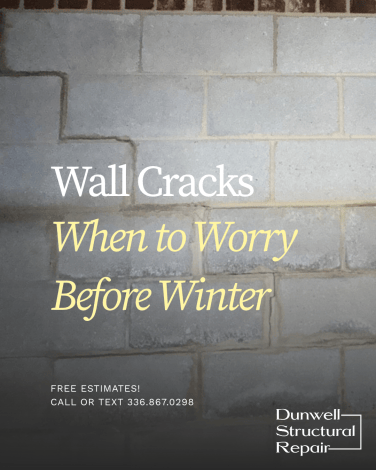
Stair step cracks follow the mortar joints between bricks or concrete blocks.
These cracks can sometimes indicate differential settlement, which happens when one part of a structure moves differently from another. They may also develop for other reasons, so the pattern alone does not confirm the cause.
Pay attention to whether the crack is widening, whether new cracks are appearing, or whether you notice other changes around the home.
Horizontal Foundation Cracks
Horizontal cracks in foundation walls deserve particular attention.
In some situations, they can indicate that soil pressure is pushing against the wall and causing it to bow inward. This type of movement can become a structural concern if it continues.
If you notice a long horizontal crack in a basement or crawl space foundation wall, especially along with bowing or inward movement, have it evaluated by a qualified professional.
Cracks Around Doors and Windows
Cracks that appear diagonally from the corners of doors or windows may be associated with movement in the structure. You might also notice doors that suddenly stick, windows that become difficult to open, or gaps forming around trim.
These symptoms do not automatically mean you have a foundation problem, but when several appear together, they can help indicate that something has changed.
Why Check Cracks Before Winter?
Winter in central North Carolina can bring fluctuating temperatures, cold periods, and stretches of wet weather. Those changing conditions can affect soil moisture and building materials around your home.
Rainwater can also find its way through existing foundation openings, depending on the location of the crack and the surrounding drainage conditions.
Checking cracks in the fall gives you an opportunity to document what you see, address obvious drainage concerns, and seek professional guidance if something looks unusual.
You do not need to panic over every small crack. The goal is to understand what you are seeing before it becomes more difficult to determine whether anything has changed.
How to Monitor a Crack at Home
If you have a small crack that does not appear to be an immediate concern, keeping track of it can be helpful.
Here are a few simple steps:
- Take a photograph. Include the date so you can compare it with future photos.
- Record the location. Note which wall the crack is on and where it begins and ends.
- Watch for changes. Look for widening, lengthening, new cracks, or changes in the surrounding wall.
- Check for moisture. Look for dampness, water staining, or signs that water is entering through the crack.
- Note other symptoms. Pay attention to uneven floors, sticking doors, or walls that appear to be bowing.
Monitoring is useful for understanding changes, but it should not replace an inspection when a crack appears significant or the wall shows signs of movement.
When Should You Call a Professional?
Consider scheduling an inspection if you notice:
- Cracks that are growing or changing noticeably
- Long horizontal cracks in foundation walls
- Walls that appear to bow, lean, or bulge
- Stair step cracks accompanied by other signs of movement
- Water entering through foundation cracks
- Several new cracks appearing around the same time
- Cracks accompanied by uneven floors or doors and windows that suddenly stick
If a foundation wall appears to be moving inward or shows significant bowing, do not wait until spring to have it evaluated.
An inspection can help determine whether the issue is cosmetic, related to moisture, or connected to a structural concern that needs repair.
Get Answers Before Winter Arrives
Wall cracks can have different causes, and the best solution depends on what is happening behind the visible damage. Sealing a crack may help address water entry in some situations, while structural movement may require a different approach.
At Dunwell Structural Repair, we look beyond the crack itself to evaluate the surrounding foundation, drainage conditions, and other signs that may help explain the problem. Our goal is to identify the likely cause and explain practical options without recommending repairs you do not need.
Concerned About a Crack in Your Home?
Fall is a good time to take a closer look and get answers before winter weather arrives.
Dunwell Structural Repair offers free inspections to help homeowners understand foundation cracks, water intrusion, and structural concerns.
Call 336.867.0298 or visit dunwellsr.com to schedule your free inspection.