
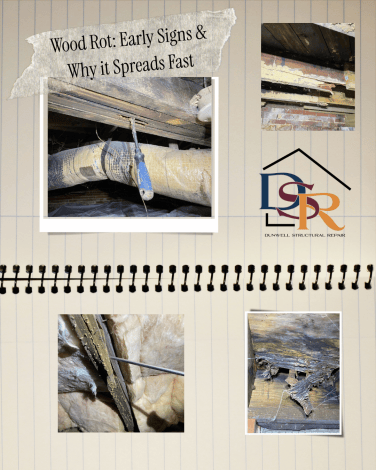
Your home may look perfectly fine from the outside while moisture is quietly causing damage underneath.
Wood rot is one of the concerns we often find in damp crawl spaces. Because much of the structure beneath your home is out of sight, moisture problems can go unnoticed for a long time. By the time a homeowner notices sagging floors or other visible changes, the underlying issue may have been developing for months or even years.
The good news is that catching moisture and wood damage early can help prevent more extensive repairs.
What causes wood rot?
Wood rot develops when wood remains exposed to excessive moisture for an extended period of time. A damp crawl space creates conditions that allow the problem to grow.
Common sources of moisture include:
- Standing water beneath the home
- High humidity
- Plumbing leaks
- Poor drainage around the foundation
- Missing or damaged vapor barriers
- Water entering through foundation walls or other openings
The most important step is identifying where the moisture is coming from. Repairing damaged wood without addressing the source of the moisture can allow the problem to continue.
Early signs of wood rot
Because crawl spaces are not areas most homeowners visit regularly, the first signs can be easy to miss.
Some warning signs include:
A musty smell
A persistent musty odor can be an early sign that excess moisture is present beneath your home. While the smell does not always mean wood rot has developed, it is a good reason to investigate the crawl space.
Darkened or discolored wood
Wood that has been exposed to ongoing moisture may appear darker or discolored. Changes in the appearance of floor joists, beams, or other structural components can indicate that moisture has been present for some time.
Soft or deteriorating wood
Wood that feels soft, weak, or begins to break apart may have significant moisture damage. This is a sign that should be evaluated before the condition worsens.
Sagging or uneven floors
When structural wood components become weakened, homeowners may eventually notice changes inside the home. Floors may begin to feel uneven, soft, or sag in certain areas.
Damaged insulation
Wet or sagging insulation can be another clue that moisture is affecting the crawl space. While damaged insulation does not necessarily mean wood rot is present, it often points to conditions that should be addressed.
Why does wood rot spread?
Wood rot can continue to affect additional areas when the conditions that caused it remain in place.
If a crawl space stays damp, nearby wood framing may continue to be exposed to excessive moisture. High humidity can also affect multiple areas throughout the crawl space, rather than just one small section.
This is why simply repairing the visibly damaged area may not always solve the problem. The moisture source must also be identified and controlled.
Moisture control is an important part of the solution
Depending on the cause of the problem, controlling crawl space moisture may involve a combination of solutions.
These can include:
- Improving drainage around the home
- Installing an interior drainage system
- Adding a sump pump
- Installing or repairing a vapor barrier
- Crawl space encapsulation
- Adding a dehumidifier
- Repairing plumbing leaks
Every home is different, so the right solution depends on where the moisture is coming from and how it is affecting the crawl space.
Protect the structure beneath your home
Your crawl space may be out of sight, but it supports everything above it. Keeping the space dry helps protect floor joists, beams, insulation, and other important components of your home.
If you have noticed musty odors, damp conditions, sagging floors, or other signs of moisture, it may be time to take a closer look.
At Dunwell Structural Repair, we offer free inspections to help homeowners identify moisture and structural concerns, determine the root cause, and recommend the right solution.
Call 336.867.0298 or visit dunwellsr.com to schedule your free inspection.