
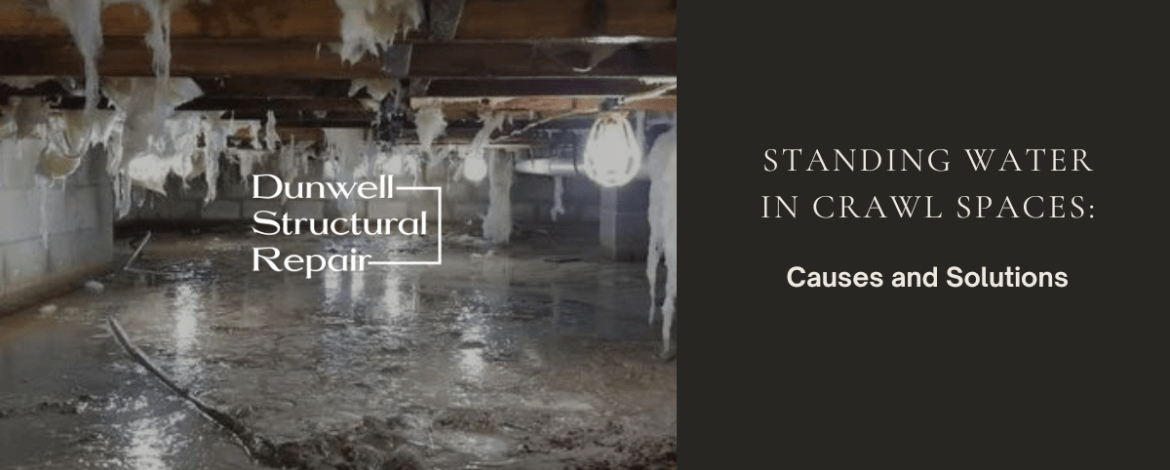
Finding standing water in your crawl space can be unsettling. Whether it is a few puddles after a storm or several inches of water beneath your home, it is a sign that something is not working as it should.
The good news is that standing water is usually a symptom of an underlying issue, and once the cause is identified, there are effective solutions to keep your crawl space dry.
Let’s take a look at the most common causes and how they can be addressed.
Why is there water in my crawl space?
A crawl space is designed to stay dry. If water is collecting beneath your home, it is getting there from somewhere.
Some of the most common causes include:
- Heavy rainfall
- Poor grading around the home
- Gutters or downspouts that discharge water too close to the foundation
- Groundwater seeping into the crawl space
- Plumbing leaks
- High water tables in certain areas
During an inspection, our goal is to determine which of these factors is contributing to the problem.
Water rarely goes away on its own
Some homeowners notice water after a major storm and assume it will eventually dry up.
While some moisture may evaporate, repeated water intrusion can leave behind long term problems, including:
- Mold and mildew growth
- Wood rot
- Damaged insulation
- Musty odors
- Increased humidity throughout the home
- Damage to structural wood components
The longer water remains beneath the home, the greater the potential for damage.
The solution depends on the source
Every crawl space is different, which is why there is no one size fits all solution.
Depending on what we find during the inspection, recommendations may include:
Improving drainage around the home
Sometimes the problem starts outside. Correcting grading, extending downspouts, or redirecting surface water may significantly reduce the amount of water reaching the crawl space.
Interior drainage systems
If groundwater is entering beneath the home, an interior drainage system can collect water and direct it to a designated collection point before it has a chance to spread throughout the crawl space.
Sump pumps
For homes where water naturally collects, a sump pump removes water from the crawl space and discharges it safely away from the foundation.
A sump pump is often an important part of a complete waterproofing system.
Vapor barriers and encapsulation
Once standing water has been addressed, installing a quality vapor barrier or complete crawl space encapsulation system helps reduce ground moisture and create a cleaner, drier environment beneath the home.
Dehumidifiers
Even after water is removed, humidity can remain high, especially during North Carolina summers.
A crawl space dehumidifier helps control moisture in the air, protecting wood framing, insulation, and indoor air quality.
Solving the cause instead of treating the symptom
One of the biggest misconceptions about crawl space waterproofing is that simply removing the water solves the problem.
In reality, the standing water is only the symptom. The real solution comes from identifying why the water is entering the crawl space and addressing that source.
That is why every home deserves a careful evaluation before recommending repairs.
Don’t wait until the next storm
If you have seen standing water beneath your home, it is best not to wait until the next heavy rain to see if it happens again.
Early intervention can often prevent more extensive moisture damage and help protect your home’s structural components.
At Dunwell Structural Repair, we provide free inspections to identify the source of crawl space water and recommend solutions that fit your home’s specific needs. Whether the answer is improved drainage, a sump pump, an interior drainage system, or a complete encapsulation system, our goal is to provide a long term solution, not just a temporary fix.
If you have noticed standing water or moisture beneath your home, call 336.867.0298 or visit dunwellsr.com to schedule your free inspection.