
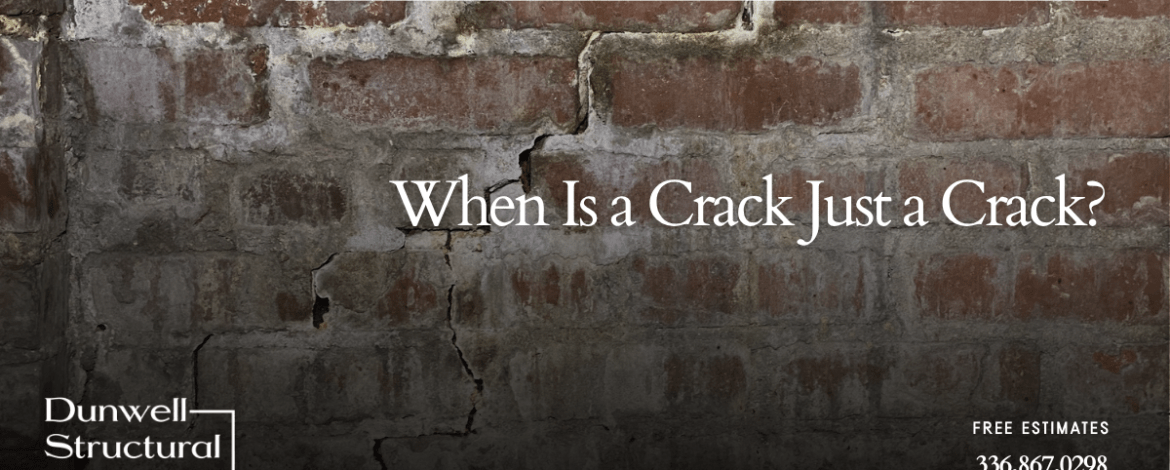
One of the most common reasons homeowners call us is because they have noticed a crack.
Sometimes it is a small crack in the drywall above a door. Other times it is a crack in the foundation wall or basement floor. The first question is almost always the same:
“Should I be worried?”
The answer is…it depends.
Not every crack means your home has a structural problem. In fact, many cracks are a normal part of a home’s aging process. The key is understanding what type of crack you are looking at and whether it is changing over time.
Cosmetic cracks are common
Homes naturally settle over time. As building materials expand, contract, and adjust to seasonal changes, small cosmetic cracks can develop.
These are often found in:
- Drywall, especially above doors and windows
- Corners where walls meet ceilings
- Concrete garage floors
- Basement slabs
If these cracks remain small and do not change, they are often nothing more than normal settling.
Some cracks deserve a closer look
While many cracks are harmless, others may indicate movement within the foundation.
Pay closer attention if you notice:
- Cracks that continue to grow
- Wide cracks that become noticeably larger over time
- Stair step cracks in block or brick foundations
- Horizontal cracks in foundation walls
- Multiple cracks appearing in different areas of the home
- Cracks accompanied by bowing walls or uneven floors
These symptoms do not automatically mean major structural damage, but they should be evaluated to determine the cause.
Horizontal cracks are especially important
One type of crack that should never be ignored is a long horizontal crack in a foundation wall.
Unlike many vertical cracks that may result from normal settling, horizontal cracks are often caused by pressure from saturated soil pushing against the foundation. Over time, that pressure can cause the wall to bow inward or lose structural integrity.
If you notice a long horizontal crack, especially if the wall appears to be leaning or bulging, it is a good idea to schedule an inspection as soon as possible.
Look beyond the crack itself
A crack is often just one piece of the puzzle.
During an inspection, we also look for other signs such as:
- Doors or windows that stick
- Uneven or sloping floors
- Gaps around trim
- Water intrusion
- Drainage issues around the home
- Signs of foundation movement
Looking at the entire home helps us determine whether the crack is simply cosmetic or part of a larger issue.
Monitor changes over time
If you find a crack that appears minor, one of the best things you can do is monitor it.
Take a clear photo and note the date. Measure the width if possible and compare it every few months, especially after periods of heavy rain or extended dry weather.
If the crack begins to widen, lengthen, or new cracks appear nearby, it is time to have it evaluated.
Peace of mind is worth the inspection
Most homeowners are not foundation experts, and you should not have to guess whether a crack is serious.
Sometimes we tell homeowners that the crack is simply normal settling and no repair is needed. Other times we identify an underlying drainage or structural issue that can be addressed before it becomes more significant.
Either way, knowing the cause gives you confidence and allows you to make informed decisions about your home.
If you have noticed a crack and are unsure what it means, Dunwell Structural Repair offers free inspections throughout Central North Carolina. We will identify the root cause, explain what we find, and recommend a solution only if one is needed.
Call 336.867.0298 or visit dunwellsr.com to schedule your free inspection.