
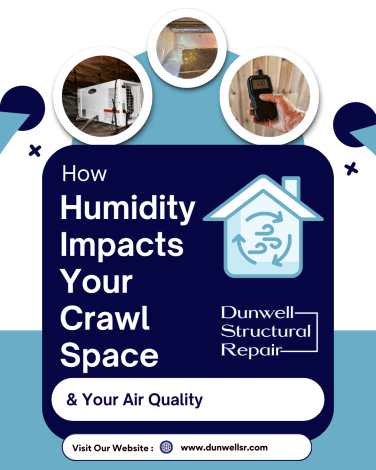
When homeowners think about humidity, they usually think about the weather outside. But some of the most important humidity levels in your home may actually be beneath your feet.
Your crawl space plays a major role in the health and comfort of your home. When humidity levels become too high, the effects can extend far beyond the crawl space itself, impacting air quality, energy efficiency, and even the structure of your home.
Your crawl space and your living space are connected
Many homeowners assume that what happens in the crawl space stays in the crawl space. In reality, air naturally moves throughout a home.
As warm air rises, it can pull air from the crawl space into the living areas above. This means moisture, odors, and airborne particles from beneath your home can eventually make their way into the rooms where you spend your time.
If your crawl space is damp, your home may feel the effects even if you never go under the house.
High humidity creates the perfect environment for problems
When humidity levels remain elevated, moisture begins to affect materials throughout the crawl space.
Common issues include:
- Mold and mildew growth
- Musty odors
- Damp insulation
- Wood rot
- Condensation on surfaces
These conditions can worsen over time and may eventually lead to more expensive repairs if left untreated.
Humidity can affect indoor air quality
Excess moisture often creates conditions where mold spores and other airborne contaminants can thrive.
While not every damp crawl space will develop mold, elevated humidity increases the risk. Homeowners may notice:
- Musty smells
- Stale indoor air
- Increased allergy symptoms
- A general feeling of dampness inside the home
Improving crawl space conditions can often improve the overall comfort of the home as well.
Your heating and cooling system has to work harder
Humid air is harder to condition than dry air.
When excess moisture enters the home from the crawl space, your heating and cooling system must work harder to maintain comfortable indoor conditions. This can lead to higher energy usage and make your home feel less comfortable during the hot North Carolina summers.
A properly controlled crawl space can help create a more stable indoor environment.
What causes high crawl space humidity?
Several factors can contribute to excess humidity beneath a home:
- Open foundation vents
- Exposed soil
- Poor drainage around the home
- Groundwater intrusion
- Missing or damaged vapor barriers
- Inadequate moisture control systems
In many cases, multiple factors are working together to create the problem.
Solutions that help control humidity
Fortunately, crawl space humidity can often be managed effectively.
Depending on the home, solutions may include:
- Sealed vapor barriers
- Interior drainage systems
- Sump pumps
- Crawl space encapsulation
- Dehumidifiers
- Exterior drainage improvements
The goal is to create a dry, controlled environment that protects both the crawl space and the home above it.
Don’t forget about dehumidifier maintenance
If your crawl space already has a dehumidifier, regular maintenance is important. Filters should be checked and replaced as needed, and the system should be inspected to ensure it is operating properly.
For homeowners who prefer not to crawl under their home, Dunwell Structural Repair offers an annual maintenance plan. As part of this service, we inspect and service the dehumidifier, replace filters when needed, and evaluate the overall condition of the crawl space system, including vapor barriers, drainage components, and moisture control measures.
A healthier crawl space means a healthier home
Your crawl space may not be a part of your home that you see every day, but it has a significant impact on comfort, air quality, and long term structural performance.
Keeping humidity under control is one of the best investments you can make in the health of your home.
If you have questions about crawl space moisture, dehumidifiers, or indoor air quality, call Dunwell Structural Repair at 336.867.0298 or visit dunwellsr.com to schedule a free inspection.