
A home’s foundation is designed to last for decades, but no material lasts forever. Soil conditions, moisture, construction methods, and maintenance all play a role in how long a foundation performs as intended.
Understanding the lifespan of common foundation materials can help homeowners know what to watch for and when it may be time for repairs or upgrades.
Poured concrete foundations
Poured concrete foundations are common in newer homes. When properly installed and protected from excess moisture, they can last many decades.
Over time, poured concrete may develop small cracks due to settling or soil movement. These cracks are often not structural, but they can allow water intrusion if left unaddressed.
Typical lifespan with proper care can exceed fifty years, especially when drainage and moisture control systems are in place.
Concrete block foundations
Concrete block foundations are made of stacked masonry units and are common in many homes built in the mid to late twentieth century.
Because block foundations contain mortar joints, they can be more vulnerable to moisture and pressure from surrounding soil. Horizontal cracking or bowing walls can occur if drainage issues are present.
With proper waterproofing and structural reinforcement when needed, block foundations can perform well for many decades.
Brick and stone foundations
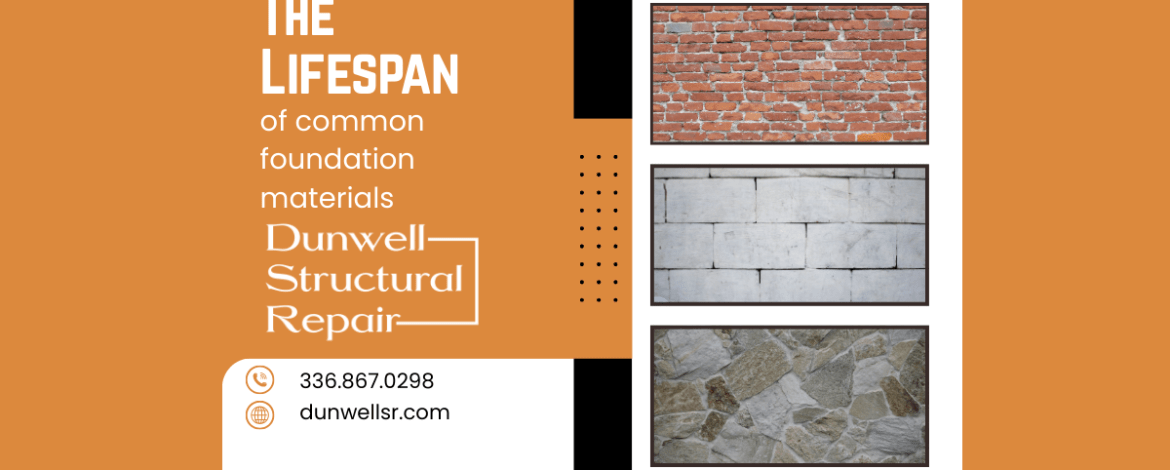
Older homes often sit on brick or stone foundations. These materials were widely used before modern concrete became common.
Brick and stone are durable, but the mortar holding them together can weaken over time. Moisture, freeze thaw cycles, and soil movement can all contribute to deterioration.
With maintenance and occasional reinforcement, brick and stone foundations can last well over one hundred years.
Wood foundations and piers
Some older homes and additions use wood posts or piers for support. While treated wood can be durable, it is more sensitive to moisture and pests than masonry materials.
The lifespan of wood supports depends heavily on moisture control. In damp crawl spaces, wood components may deteriorate much faster.
Proper drainage, vapor barriers, and encapsulation can significantly extend the life of wood support systems.
Steel support systems and modern reinforcements
Steel supports such as adjustable posts and wall reinforcement systems are often added to stabilize existing foundations.
When properly installed and protected from moisture, steel systems can last for the life of the home. These materials are designed to handle heavy loads and resist movement over time.
Regular inspections help ensure these systems continue to perform as intended.
What affects foundation lifespan the most
No matter the material, a foundation’s lifespan is influenced by a few key factors:
- Moisture management
- Soil conditions
- Drainage around the home
- Quality of original construction
- Ongoing maintenance
Addressing these factors often matters more than the material itself.
Knowing when to have your foundation checked
Cracks, uneven floors, sticking doors, or water intrusion are signs that a foundation may be under stress. These issues do not always mean the foundation has reached the end of its lifespan, but they do signal that attention is needed.
At Dunwell Structural Repair, we help homeowners understand the condition of their foundation and what steps can extend its life. We offer free estimates and clear recommendations based on your home’s needs.
If you have questions about your foundation or want a professional evaluation, call 336.867.0298 or visit dunwellsr.com.