
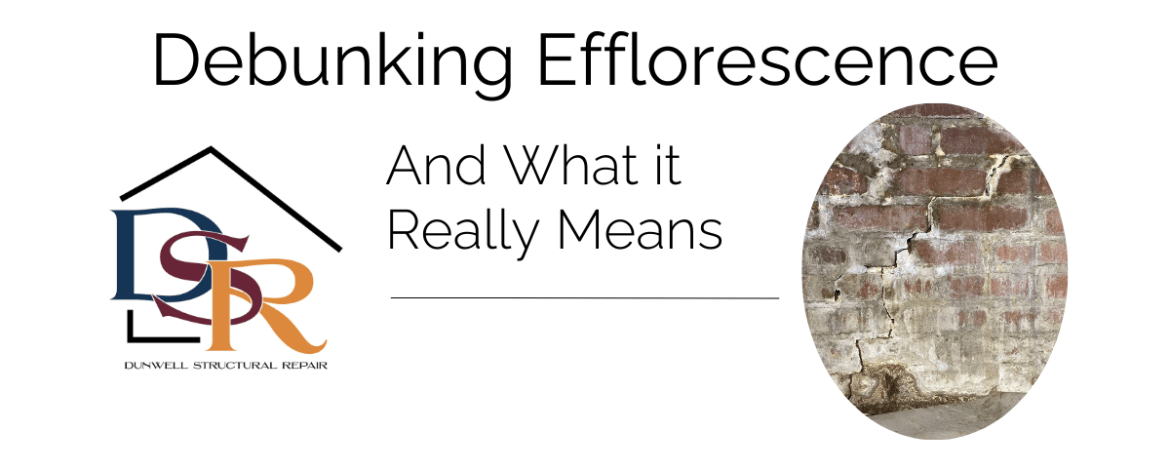
If you have ever noticed a white or chalky residue on your basement walls or foundation, you may have been told it is called efflorescence. For many homeowners, seeing it for the first time can be confusing or concerning.
The good news is that efflorescence itself is not a structural problem. However, it is an important clue about what is happening with moisture around your home.
What is efflorescence?
Efflorescence is a white powdery substance that forms on concrete or masonry surfaces. It is made up of natural salts that are found within concrete, block, or mortar.
When moisture moves through the foundation wall, it dissolves these salts and carries them to the surface. As the water evaporates, the salts are left behind, creating the white residue you see.
Is efflorescence harmful?
Efflorescence does not damage your foundation by itself. It does not weaken concrete or cause cracks. In many cases, it can simply be brushed or washed away.
That said, efflorescence is a sign that moisture is passing through your foundation wall. While the residue itself is harmless, the moisture behind it can lead to other issues over time if it is not addressed.
What efflorescence is really telling you
Efflorescence means water is present where it should not be. This moisture may be coming from poor drainage, clogged gutters, high groundwater, or hydrostatic pressure against the foundation wall.
In basements and crawl spaces, ongoing moisture can contribute to musty odors, mold growth, damaged insulation, and in some cases, long term foundation concerns.
Common places homeowners see efflorescence
Efflorescence most often appears on basement block walls, poured concrete walls, and foundation piers. It is also common near cracks, cold joints, or areas where water tends to collect outside the home.
Seeing efflorescence after heavy rain is especially common and is a good indicator that water is finding its way through the foundation.
Can you prevent efflorescence?
The most effective way to reduce or eliminate efflorescence is to address the moisture source. This may include improving exterior drainage, extending downspouts, correcting grading, or installing interior waterproofing systems.
Simply painting over the wall or cleaning the residue does not stop the moisture movement. Without addressing the cause, efflorescence will usually return.
When to call a professional
If efflorescence appears frequently, spreads over a large area, or is accompanied by water intrusion or damp conditions, it may be time for a professional evaluation.
At Dunwell Structural Repair, we help homeowners understand where moisture is coming from and what solutions make sense for their specific home. We offer free estimates and honest recommendations so you can make an informed decision.
A helpful warning sign, not a diagnosis
Efflorescence is best viewed as a warning sign rather than a problem on its own. It tells you moisture is present and gives you the opportunity to address it before it leads to bigger issues.
If you have questions about efflorescence or notice moisture in your basement or crawl space, give us a call at 336.867.0298 or visit dunwellsr.com to schedule your free estimate.